
Selected case study
Excel Training System
Connect planned sessions to actual training, personal records, and coaching decisions.
Active workbook · explanatory scientific case
Read the 52-week periodization caseUpdated September 2026
Microsoft Excel · Structured tables · Formulas · Data validation
The problem
Training data often lives in disconnected sheets, notes, and templates, making it difficult to plan, review, and improve over time.
My contribution
- Designed the workbook workflow from planning through actual session entry and review.
- Connected structured tables, formulas, validation, completion checks, records, and charts.
Evidence you can inspect
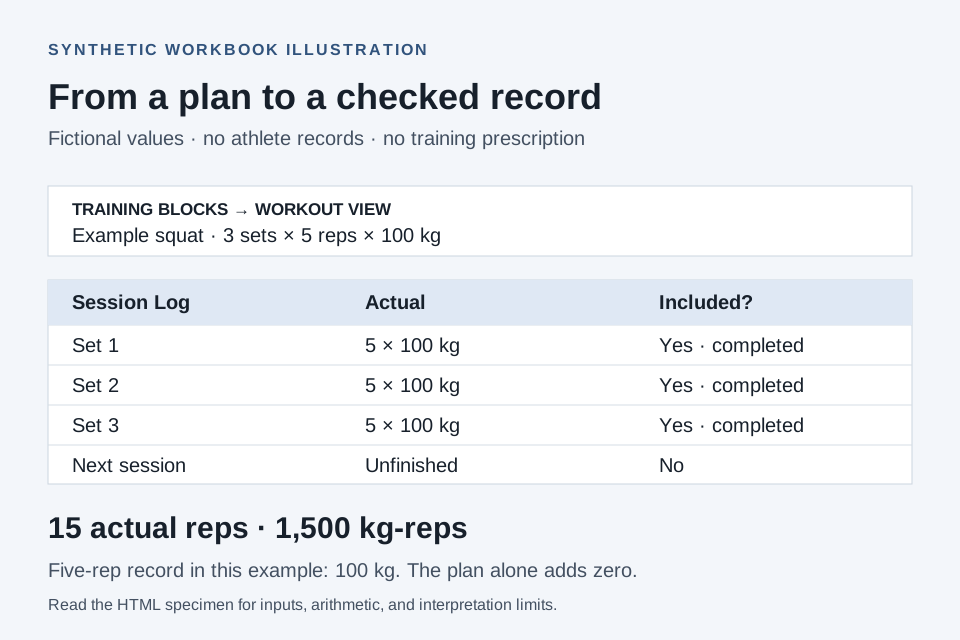
Training Blocks feed Workout View and prefill Session Log. Actual results remain editable; completion separates performed work from a plan.
The public specimen follows one fictional session through a log and a record interpretation. Its three completed sets contribute 1,500 kg-reps. An unfinished entry contributes nothing to the completed-session total.
Inspect the inputs and calculationThis is a synthetic explanatory illustration, not an exported athlete workbook. The Progress Dashboard and record boards are described in the case; this small specimen does not reproduce every sheet or formula.
How I approached the work
- Connect programmed workouts to the session checklist
- Separate editable actuals from calculated workout views
- Limit record calculations to completed, valid results
- Check data propagation, historical records, checkbox resets, formulas, and charts
Demonstrated outcomes
- Training Blocks feed Workout View and prefill the Session Log.
- Completed valid sessions update record boards and progress views.
Limitations and unfinished work
- The workbook is a coaching tool, not evidence that one annual schedule is optimal for everyone.
- Personal athlete records are private; public worked examples use synthetic values.
- The public specimen explains selected mechanics. It is not the original workbook, a full formula audit, or an individualized training prescription.
Explore further
- Inspect the fictional workbook example
Read the example inputs, completion rule, arithmetic, and record interpretation in a printable HTML specimen. No athlete data or spreadsheet software is required.
- Read the 52-week periodization case
Inspect the phase calendar, scientific rationale, glossary, and unresolved decisions.
- Snap Down + Vertical Jump demonstrationExternal site
A public teaching example for landing and jumping movement. It gives the training discussion context without claiming a measured program outcome. Opens on YouTube.